Truckee River Float Fishing
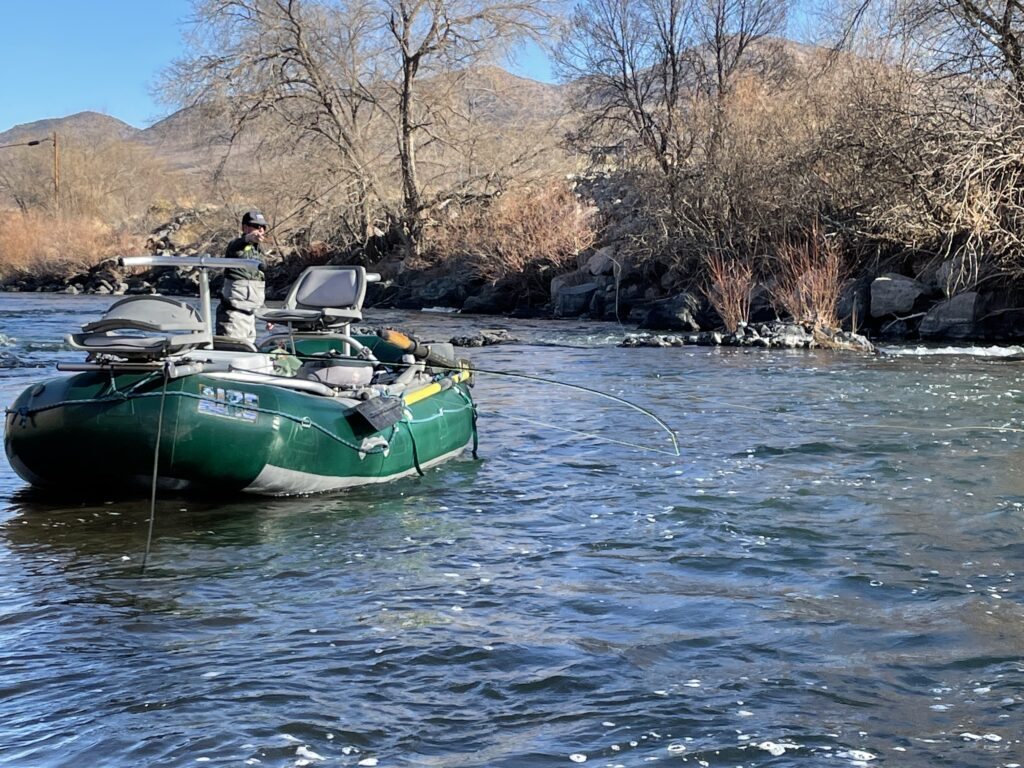
Floating the Truckee River gives anglers a completely different perspective on our home water. A raft lets us cover long sections of river, reach water that can be difficult to access on foot, and fish through changing runs, pockets, banks, and holding water over the course of a full day.
The Truckee is also a technical river to float. Boulder-filled channels, shallow sections, limited launch access, and changing flows mean the section we choose depends heavily on current conditions.
- 13-foot AIRE raft
- California & Nevada sections
- Two anglers + guide
- Seasonal, conditions-based trips
A Different Perspective on the Truckee River
Truckee River float fishing is not simply a matter of launching a boat and drifting downstream. The river contains technical boulder-filled runs, shallow channels, and relatively few established put-ins and take-outs. Many of the sections we use are dictated as much by access as by the fishing itself.
Highway pullouts, city parks, and other places that allow us to get a raft close to the water are limited. Even with those logistical challenges, floating remains one of our favorite ways to explore the Truckee and see stretches of river from a perspective that is difficult to experience entirely on foot.
Why We Use an Inflatable Fishing Raft
We operate a 13-foot AIRE whitewater raft with an NRS fishing frame. The boat is set up for three people, with one angler in the bow, one in the stern, and the guide rowing from the center.
- Standing platforms and seats for both anglers
- Anchor and pulley system for controlled stops
- Fishing frame designed for stability and room to cast
- Inflatable construction suited to shallow, rocky water
The Right Tool for a Boulder-Filled River
The Truckee can be shallow, rocky, and unforgiving to a hard-sided boat. An inflatable raft can slide and bounce over rocks that would be much harder on aluminum or fiberglass.
It is not unusual to touch bottom or hang briefly on a boulder and need to shift the raft free. The forgiving hull, maneuverability, and whitewater design make an inflatable raft a practical choice for the Truckee.
The tradeoff is weight. Our raft and fishing frame are substantial, so established launches or places where we can get the trailer close to the water make the day much easier.
Truckee River Float Sections
We use several float sections in California and Nevada. The best choice depends on flows, safe access, water temperature, season, and what type of fishing makes the most sense that day.
Floriston to Farad
On the California side, one of our float sections begins near Floriston and runs roughly three miles downstream toward the Farad area. This stretch is highly flow dependent.
At higher water, the float can move quickly. Below roughly 600 CFS, the upper portion can become quite shallow and rocky, while flows above roughly 1,000 CFS can make the trip move fast. Because the ideal window is relatively narrow, we often stop and concentrate our fishing time in productive areas rather than simply fishing continuously from the moving raft.
Mayberry Park to Wingfield Park
The west side of Reno provides one of the more recognizable Nevada float options. Mayberry Park and Wingfield Park give us established public areas at both ends of the float.
We often look for flows in roughly the 500–600 CFS range for this section. The river can fish surprisingly well through Reno, with healthy populations of brown and rainbow trout and some mountain whitefish. Getting the raft into and out of the water still requires some creativity and muscle.
Lockwood to Mustang
East of Reno and Sparks, the Truckee enters open desert country. Lockwood provides an established access area, and the lower-river float toward Mustang is one of the easiest sections for getting our raft relatively close to the water.
This stretch can be floated across a wider range of flows, often from roughly 400 CFS to 1,000+ CFS depending on the specific conditions. The slower character of the lower river, vehicle access, and long stretches of lightly pressured water make it a unique Truckee River experience.
Fishing the Lower Truckee River
The desert section below Reno and Sparks is an underrated fishery. Brown and rainbow trout remain the primary trout species, and common carp are also present in portions of the lower river. Winter can be especially interesting, including periods of consistent Blue-Winged Olive activity and rising trout.
The lower river also carries some of the visible impacts of flowing through an urban area. Trash can accumulate in and along the channel, which is unfortunate because this section has tremendous potential and can hold quality fish with comparatively little angling pressure.
Lower-River Water Temperature Matters
The same desert environment that can make the lower river productive during cooler months can make it unsuitable for trout fishing during the hottest part of summer. In average or below-average water years, afternoon temperatures can climb quickly.
We check current water temperatures before choosing this section and do not target trout when temperatures are near or above 70°F. During mid to late summer, cooler upstream sections or another trip plan may be the more responsible choice.
Float Fishing and Streamers
If you like fishing streamers, a raft is one of the best ways to do it on the Truckee. Floating lets us move through long stretches of river at a productive pace while reaching banks, pockets, and holding water that may be difficult or impossible to approach from shore.
Streamers can be stripped, jigged, dead-drifted, or worked through likely holding water as the boat moves downstream. The combination of mobility and access makes float fishing especially well suited to covering water with larger flies.
Truckee River Float Trip Planning Resources
Float-section availability can change quickly. Use these pages to understand current river conditions, compare California and Nevada sections, and see the broader Truckee River corridor before your trip.
Truckee River Float Fishing FAQs
Can you float the Truckee River for fishing?
Yes. Current Fly Fishing runs seasonal float trips on suitable sections of the Truckee River in California and Nevada. The exact section depends on flows, access, water temperature, and safe river conditions.
What kind of boat do you use on the Truckee River?
We use a 13-foot AIRE inflatable whitewater raft with an NRS fishing frame, standing platforms, seats for two anglers, and an anchor system.
How many people can fish from the raft?
Our standard setup is two anglers plus one guide. One angler fishes from the bow, one from the stern, and the guide rows from the center of the raft.
What sections of the Truckee River do you float?
Depending on conditions, we may float sections near Floriston and Farad in California, Mayberry Park through Reno, or the lower river from Lockwood toward Mustang in Nevada.
Are Truckee River float trips available all year?
No. Float availability is highly dependent on river flows, access, water temperature, weather, and safe boating conditions. Some sections have a relatively narrow seasonal window.
Is float fishing good for streamers?
Yes. Floating is especially useful for streamer fishing because it allows anglers to cover long stretches of river and reach water that may be difficult to access from the bank.
Plan a Truckee River Float Trip
Float trips are selected around current flows, water temperature, access, season, and the experience we want to create for your group. When the river is in the right range, a raft is one of the best ways to experience a larger piece of the Truckee in a single day.
Two anglers + guide · California & Nevada sections · Float availability depends on river conditions